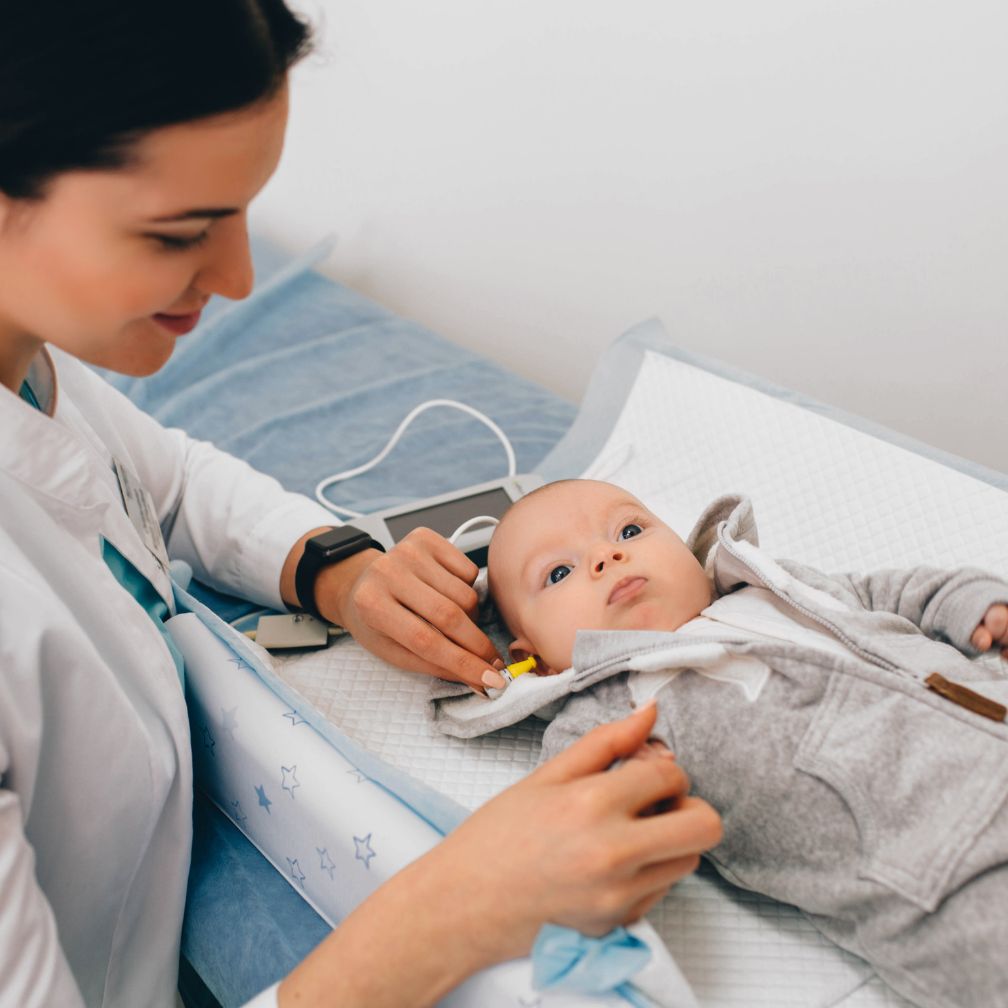
For guardians of newborns, discovering that an infant faces auditory obstacles rapidly creates overwhelming emotional strain. Yet the positive reality is: via timely identification and therapeutic support, children with hearing deficits can genuinely thrive exceptionally. Indeed, these children can build language, communication skills, and strong connections with the world around them, leading to a vibrant, rewarding life!
Utilizing wearable hearing aids and state-of-the-art cochlear implants supplies two proven clinical methods for backing babies with hearing impairment. Throughout this resource, we examine their working mechanisms to guide you in choosing the most effective pathway for your infant.
Grasping the Basics of Pediatric Hearing Loss
Hearing impairment in newborn infants frequently arises from various underlying sources, including:
- Specific genetic factors (even in the absence of an established family history)
- Documented prenatal viral exposures such as cytomegalovirus (CMV) or rubella strains
- Complications during birth, incorporating lack of oxygen or premature birth
- Selected pharmaceutical treatments utilized inside neonatal intensive units
Which step demands immediate priority? Rapid clinical identification. That’s why babies across the United States receive evaluations for hearing deficits before heading home. Clinical pediatric audiology doctors faithfully maintain the official “1-3-6” operational timeline:
- First-stage auditory screening administered prior to 1 month of life
- Definitive hearing diagnosis finalized by 3 months of age
- Targeted intervention (incorporating wearable devices or care) commenced within 6 months of age
Meeting these clinical targets provides infants optimal support for normal speech, expressive language, and intellectual growth. Should you require assistance surrounding these screening procedures, your family pediatrician stands eager to guide you!
Infant Hearing Aids: Overview & Benefits
When infants display mild to severe hearing challenges, pediatric hearing aids typically serve as the primary solution. These tiny, wearable hearing tools elevate environmental sound levels, enabling babies to catch human speech and environmental audio more distinctly.
Custom infant-adapted hearing aids act as:
- Fully cleared and safe for young babies merely weeks past delivery
- Constructed using pliable, soft ergonomic molds that adapt as the baby matures
- Outfitted with tamper-resistant battery latches and specialized pediatric safety components
- Uniquely calibrated by a trained pediatric audiologist to mirror your infant’s unique auditory curve
As your child matures, their wearable units necessitate ongoing recalibration to maintain ideal acoustic output and ear-canal fit.
Cochlear Implants for Infants
When an infant presents with severe to profound sensorineural hearing deficits and fails to receive sufficient benefit from standard hearing aids, a cochlear implant may be recommended. Diverging significantly from traditional hearing devices, surgical cochlear implants:
- Require surgical placement within the inner ear
- Bypass damaged parts of the inner ear
- Convert surrounding audio into precise electrical signals that directly activate the auditory nerve
Precision-implanted cochlear devices remain:
- Granted regulatory approval by the FDA for infants starting at 9 to 12 months old
- Remarkably effective when paired with early auditory-verbal therapy and consistent family engagement
- Sanctioned strictly following detailed multi-disciplinary testing by a pediatric audiologist and ENT surgeon
This process includes radiological imaging, advanced hearing evaluations, and realistic discussions regarding long-term developmental milestones.
Comparing Hearing Aids and Cochlear Implants: Key Differences
- Mild to severe auditory decline uses Hearing Aids; Severe to profound auditory destruction warrants Cochlear Implants
- Non-Invasive external placement: Hearing Aids; Surgical internal implantation: Cochlear Implants
- Standard sound amplification logic: Hearing Aids; Direct electrical signal generation: Cochlear Implants
- Starts at Infancy: Hearing Aids; Surgery can begin at 9-12 months: Cochlear Implants
Hearing Aids vs. Cochlear Implants: Final Thoughts
In the event your infant receives a hearing loss diagnosis, you can rely on excellent technological options alongside extensive professional backing. By partnering with skilled pediatric auditory specialists, a vast majority of children attain communication skills that mirror those of their age group.
Whether your youngster qualifies for external hearing aids or surgical cochlear implants, early intervention establishes a foundation for lifelong communicative success.
Are you seeking answers about your child’s overall hearing wellness? Call our clinic today to schedule a thorough assessment and individualized management strategy.